CONCEPTThe 3 Pillars of Our Methodology
Without a Strategic Blueprint,
Learning is a Cost, Not an Asset.
Expensive training fails when tools are prioritized over the science of learning.
We don't just provide tools; we fuse pedagogy with technology to create a catalyst for real outcomes.
We turn fleeting events into enduring organizational capital that evolves on its own.
Discover the three pillars of our design philosophy.
TPACK
Evidence-Based Design
Beyond intuition—Integrating the science of learning.
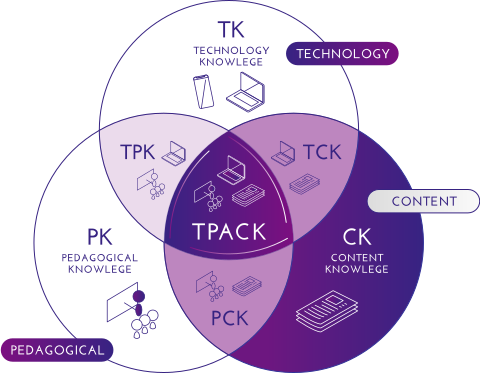
Technology alone doesn’t drive growth. We use the TPACK framework (Technology, Pedagogy, and Content) to align digital tools with how people actually learn. By designing at the intersection of these three domains, we transform tools into a catalyst for skill mastery and real-world performance.
TPACK - DetailTKTECHNOLOGY KNOWLEDGE
Knowledge and skills that enable not only the selection of systems and tools according to learning objectives but also mastery of these.
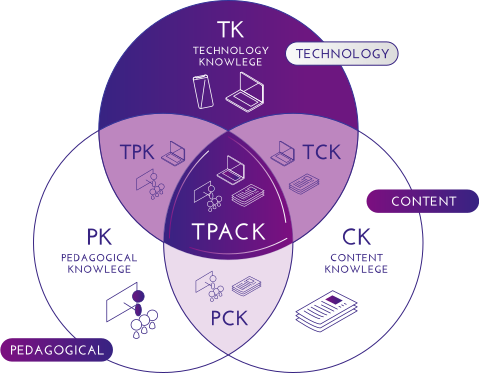
PKPEDAGOGICAL KNOWLEDGE
Knowledge and skills for the design of learning courses that lead to results.
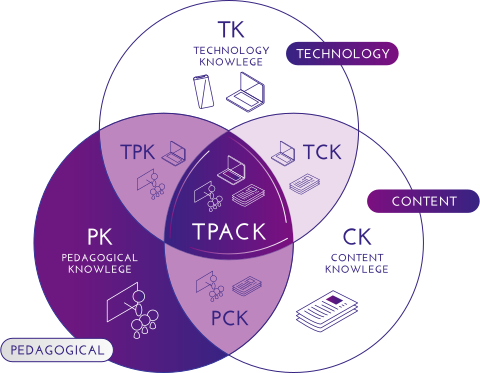
CKCONTENT KNOWLEDGE
Knowledge and skills concerning ways of creating and collecting online and offline content that is highly effective for learning.
BLENDED
LEARNING
Habitualizing Growth
Bridging the gap from "knowing" to "doing."
We replace "one-off" training with a seamless Learning Journey. By blending the energy of in-person interaction with the consistency of digital tools, we ensure learning doesn't end with the session. Our approach turns new knowledge into lasting habits and measurable behavior change.
BLENDED LEARNING - Detail #1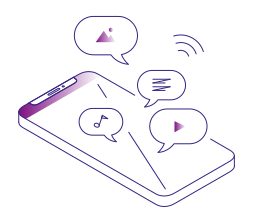
MEDIA
Laptop / Tablet / Smart Phone
DVD player / VR player
DVD player / VR player
#2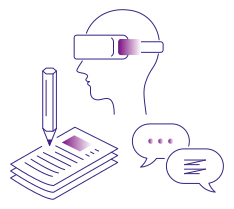
ACTIVITY
Lecture / Discussion / Debate
Test/ Roleplay / Simulation
Test/ Roleplay / Simulation
#3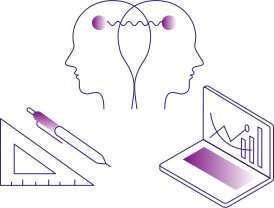
LEARNER
Different "Backgrounds," "Abilities,"
"Proficiencies," and "Personalities."
"Proficiencies," and "Personalities."
#4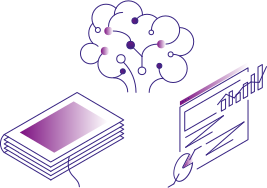
THEORY
An approach from cognitive science, behavioral science, neuroscience, psychology, marketing theory, literature, arts, and other aesthetic and sentimental aspects.
#5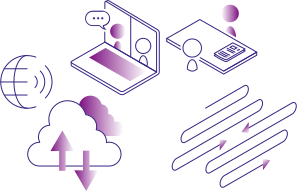
SCENE
Offline × Online
Synchronous × Asynchronous
One way × Interactive
Synchronous × Asynchronous
One way × Interactive
The goal is to maintain a state in which chemical reactions continue to occur.
LEARNING ECOSYSTEM
Self-Sustaining Culture
Building an organization that evolves on its own.
We move beyond external dependency by turning learning into a daily, autonomous habit. By implementing our five core functions, we transform individual insights into permanent organizational assets, fueling a sustainable cycle of continuous growth.
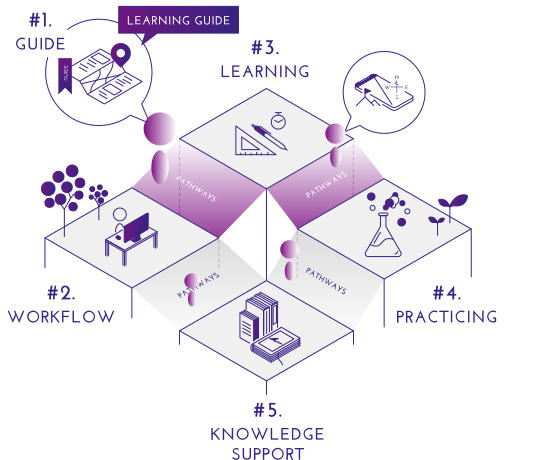
#1. GUIDELEARNING GUIDE
Presentation of a guide
for learner-centric independent learning
for learner-centric independent learning
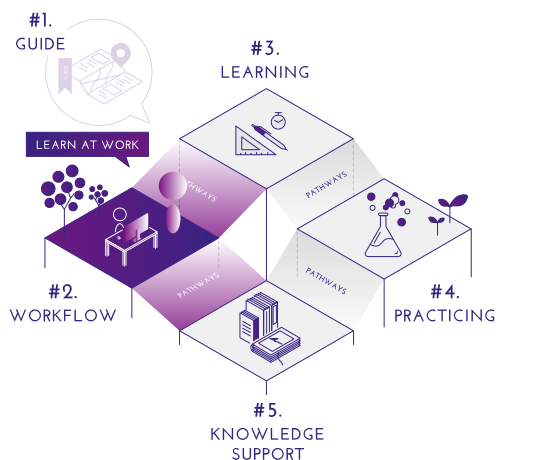
#2. WORKFLOWLEARNING ON THE JOB
Construction of a support system
for learning from on-site practice
for learning from on-site practice
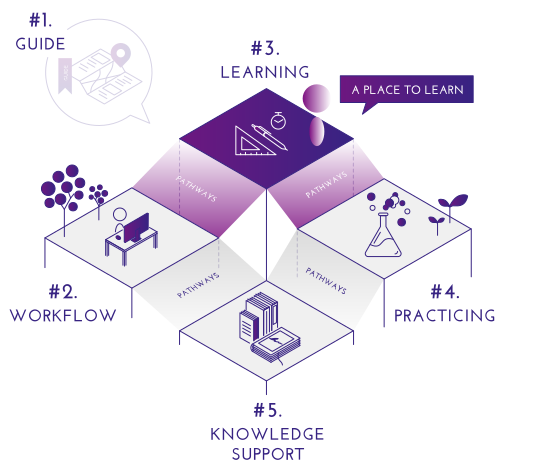
#3. LEARNINGPLACE FOR LEARNING

Provision of places for systematically learning knowledge
and skills required for newly demanded jobs
and skills required for newly demanded jobs
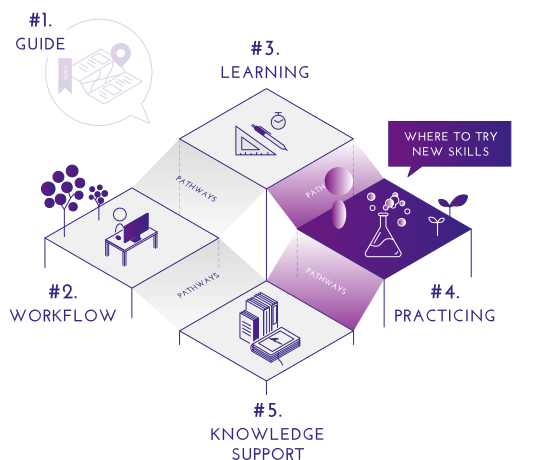
#4. PRACTICINGPLACES FOR TRYING NEW SKILLS
Provision of opportunities
for putting newly learned knowledge and skills into use
for putting newly learned knowledge and skills into use
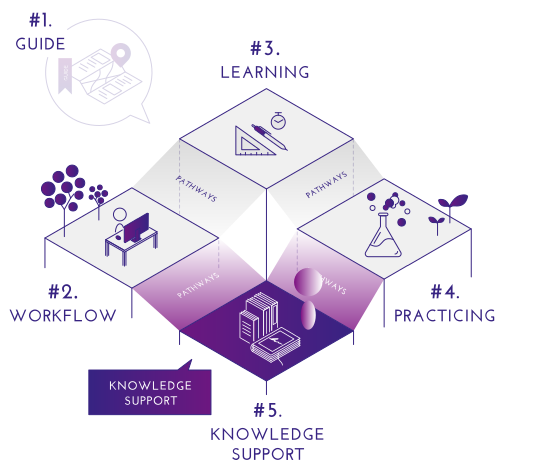
#5. KNOWLEDGEKNOWLEDGE SUPPORT
Creation of environments that enable access
to the learning that is needed, when it is needed
to the learning that is needed, when it is needed
For more details…